
What Makes a Strong University Research Storytelling Video?
KAUST Research
Case Study
The gap between credible and accessible is a strategic problem.
Universities produce some of the most important research happening today, but that does not mean people automatically understand it. A paper can be groundbreaking and still feel distant, and a presentation can be respected in the field without connecting to a broader audience. That gap is where storytelling matters, and the KAUST mangrove and seagrass film is a good example of both what works and where things become harder for general audiences.
What This Video Does Well
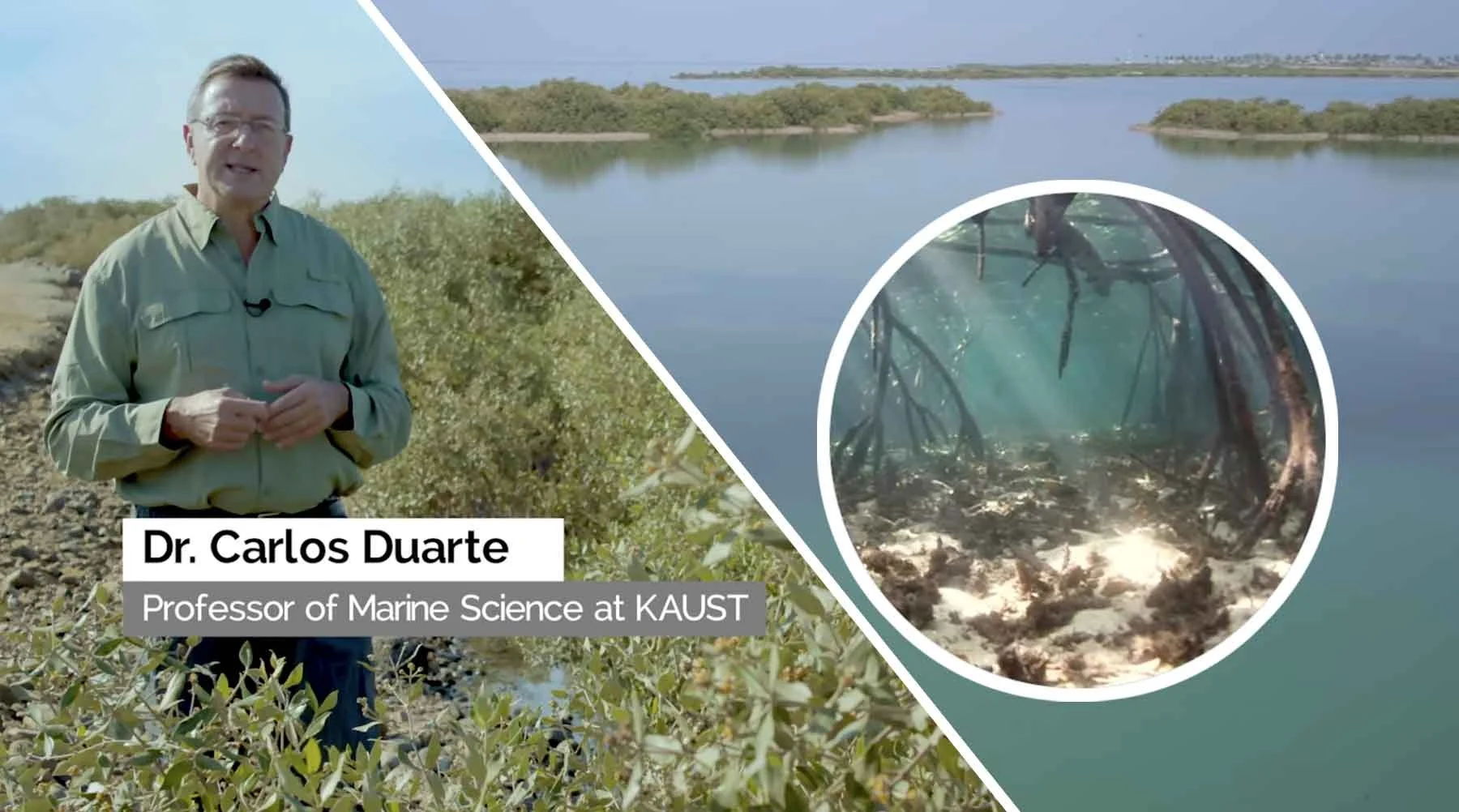
The strongest part of the film is visual clarity. Before the audience needs to understand "blue carbon," they can see the environment, mangrove roots underwater, coastal landscapes, and field footage that make the subject tangible. That matters because environmental science becomes easier to trust when people can see what is being discussed, not just hear about it.
The presence of Dr. Carlos Duarte adds authority, but more importantly, he connects the science to outcomes. Climate mitigation, biodiversity, fisheries, and coastal protection are framed as real-world effects, which helps the research feel relevant instead of abstract. The narration also supports this by giving structure and context, situating the work historically and scientifically in a way that works well for institutional credibility.
View the documentary short →
Where It Gets Harder for General Audiences
One of the easiest ways to lose an audience is starting too deep in the science. In the KAUST film, the opening moves quickly into carbon cycles and ecosystem function before the audience has a clear reason to care. The information is accurate, but it arrives before the emotional context is fully established.
Another common issue is leaning too heavily on institutional tone. The narration in this piece helps with credibility, but it also creates distance at times. When the language becomes more formal, the story feels less immediate, even though the visuals are doing the opposite.
People usually need relevance before explanation. They need to understand why something matters before they are willing to process how it works. Without that, even strong visuals can lose impact because the meaning is not landing quickly enough. This is a common tension in university storytelling, where including more information can strengthen credibility while making the piece harder to follow.
What a More Audience-First Version Might Do
A more public-facing version of this story would likely shift the entry point. Instead of starting with how mangroves store carbon, it would start with what happens if they disappear, how coastlines change, what happens to fisheries, and why that matters for people. Once that context is clear, the science becomes easier to follow and more meaningful.
It is also easy to let explanation take over the middle of the video. In this case, the section on carbon storage and environmental systems is important, but it asks the viewer to process a lot before returning to the human impact. That shift in pacing is where attention can start to drop, especially for audiences who are not already familiar with the subject. The goal is not to simplify the research, but to structure it so the audience has a reason to stay engaged.
Visual Storytelling Still Carries the Piece
Even when the explanation becomes dense, the visuals continue to carry this short documentary. The environment itself makes the research feel real, and without those images, the same narration would feel much more abstract. For science communication, visuals are not just supporting elements. They are often what allow the audience to understand the subject at all.
One Version Is Usually Not Enough
The hardest part of research storytelling isn't making a credible video. It's recognizing that one version rarely serves every audience well.
Videos like this are often expected to do too much in one version. The KAUST film works well for institutional and academic audiences, but a shorter, more audience-first version would likely perform better on social platforms. Without that second version, strong work like this can struggle to reach beyond its core audience.
This isn't a flaw in the production. It's a structural problem most universities don't plan for. The budget goes into one piece, that piece gets asked to do five jobs, and then the team wonders why it isn't performing on social or with donors the way they hoped. The answer is usually a second version, not a better single version.
Final Thought
The KAUST mangrove and seagrass film succeeds because it makes complex research visible and credible. The opportunity is in how far it travels. That balance between explanation and connection isn't just an editorial choice, it's a strategic one, and it's where strong research storytelling actually begins.
Need Help Telling Your Story?
Aeilea Media creates documentary-driven video, university communications, scientific storytelling, motion graphics, and strategic visual content for institutions creating meaningful impact.
If your team needs stronger research storytelling, science communication, or institutional video strategy, let’s talk. →