
Calculated Word Soup vs. Authentic Storytelling
The Invitation
It was a little alarming to receive an invitation to apply for a role helping AI agents learn how to replace video editors, or as they put it, "Collaborate with AI teams to improve next-generation video editing systems." Basically, they want video editors to train their AI agents on enough footage, cuts, and pacing decisions, so eventually the automated tool handles post-production on its own.
I did not pursue it, but it made me think hard about what we lose when we hand video editing over to AI, and why I feel that authentic storytelling is the one thing no model can replicate.
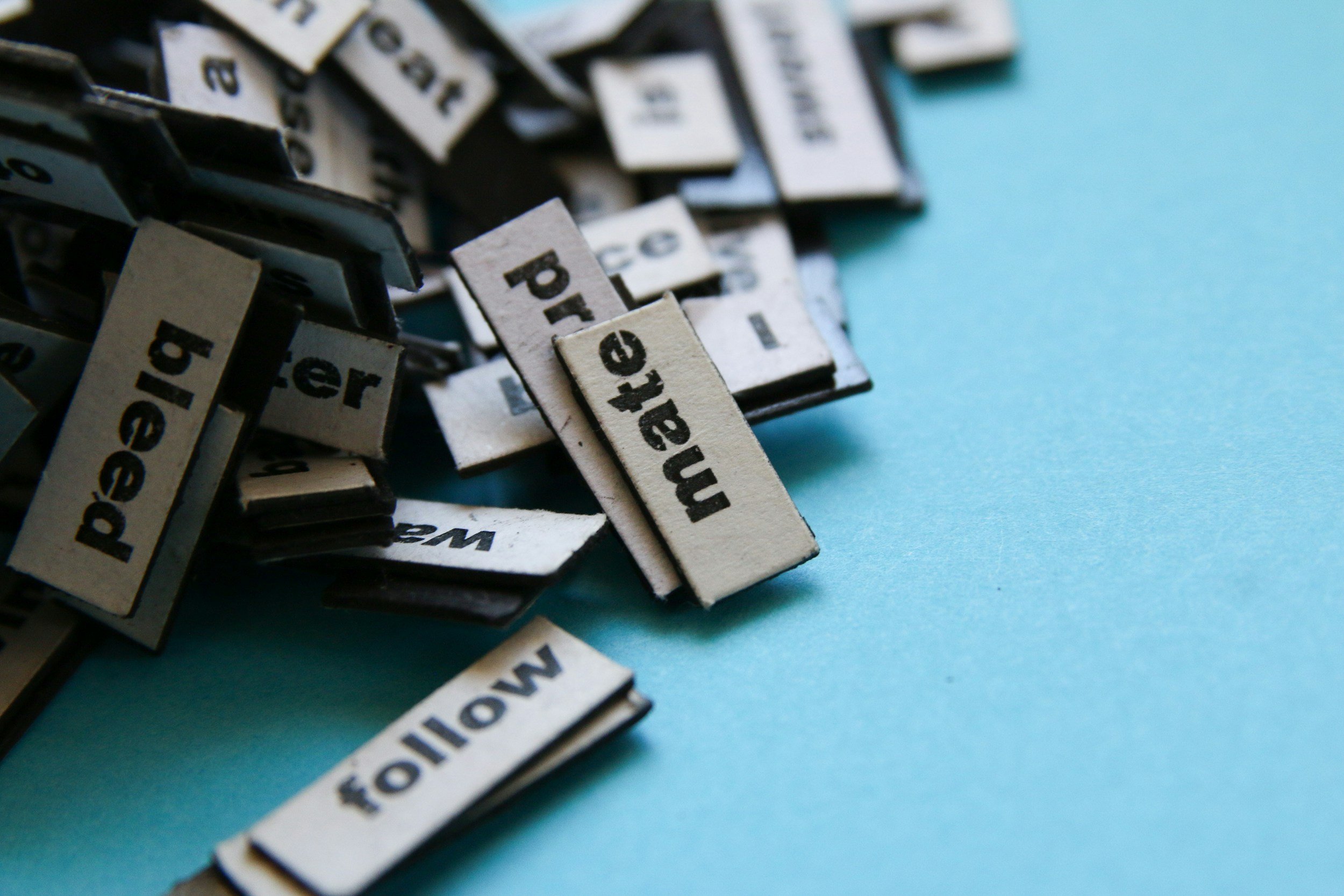
The urge to automate storytelling is not new, still it keeps producing the same hollow result.
Even though LLM-generated content might sound resonant and novel, it’s really just drawn from from a pool of writing and calculated like word soup, then regurgitated at scale.
Word Calculators Manufacturing Sincerity
With AI writing, we often sense that "AI" is little more than a misnomer propped up by hype because it's not really artificial intelligence, is it? It’s just a Large Language Model (LLM) that is using previously created human writing to combine answers in a way that sounds correct. So it has the tendency make cliched, generalized statements that feel personally meaningful, in the same way horoscopes feel accurate. It's the Barnum effect. We recognize that uneasy feeling the second we encounter it: reading marketing copy that sounds super polished but says nothing, watching creepy advertisements that have all the right parts but leave us unmoved. Audiences are getting saturated with it, but they are also getting better at detecting even the best computer-generated imagery.
Yet corporations keep pushing to use LLMs, with great faith that it will improve, seemingly without consideration for the audience’s response. Instead of asking: Do people disengage? Do they lose confidence in the organization? Do they share it less? The current corporate delusion of trusting LLMs with serious decisions is already showing its limits, with results that are mainly shaped by the first prompt. The problem is, people are still buying the stock, at least for now.
But it’s not just the manufactured sincerity issue, it's also the ethics issue. Independent artists, authors, and musicians are taking legal action against LLM companies over models trained on work that they never received consent to use and share.
So would AI companies use their automated video production tools to also pilfer content from existing films? Probably. An "AI" video editor would likely be an LLM combined with screen capture models trained on human expertise and craft. A similar structure to what was used to train self-driving cars. The human drives, the machine watches, the machine learns, and eventually the human is eliminated. Someone might argue that Waymo works, but its a functional job not a creative one.
Diffusion models learn the statistical relationship between text descriptions and visual patterns across millions of images. So when you prompt an image model, it is not drawing, it’s reconstructing images from patterns learned across millions of existing images, which is why the stolen work argument is so central to AI-image and AI-video specifically. Image generation models had to be trained on human-created imagery, unlike text which has some fair use gray area, and visual likeness and style are much harder to separate from the original work.
The Urge to Automate Storytelling
Even if the legal issues are resolved tomorrow, a deeper problem would remain: what gets lost when storytelling becomes automated. Automation is just the latest form of an older habit: replacing creative judgment with a system that promises predictable results.
Film producers have been using formulas for years, from Joseph Campbell's Hero's Journey to the Blake Snyder beat sheet. By 2013, the effort to find faster, cheaper ways to produce something that felt like a real story, Hollywood studios were just repeating a version of what was done before and began green lighting films based on whether they hit the beats. The formula reduced risk short term but hollowed out the product long term. The film industry collapse had multiple drivers: streaming economics, shifting theater attendance, COVID, and the restructuring of distribution deals. But the hollowness was already there, and it made studios far more vulnerable to failure.
TriStar Pictures was scaled back significantly. New Line Cinema lost its independence and was folded into Warner Bros. DreamWorks has had multiple restructurings. Relativity Media filed for bankruptcy twice. Several mid-tier studios that specialized in formula driven content have either closed or been absorbed into larger conglomerates. The broader pattern is clear: the middle is collapsing. Big tentpole franchise films still make money. Small independent specific films are finding audiences. The formula-driven middle, the movies that cost a lot but underperform at the box office, is where losses have been concentrated.
By contrast, independent studios like A24 have been outperforming the formula blockbuster companies because audiences are saturated with the redundancy of beat sheet produced films. People recognize the hollowness in those repeated storylines and have started choosing films that are more uncomfortable, specific, and deeply human over ones that are predictable to the point they could guess what‘s going to happen next. Notably, even A24, the studio most associated with that resistance, is not immune. As it expands, critics are already asking whether its signature aesthetic is hardening into a new kind of formula. Their edge came from specificity and creative freedom. I argue that the moment a studio optimizes around its own success, it risks losing both.
While audiences are growing ever more aware of formulaic content, it is hard to imagine that AI filmmaking will lead anywhere different. The companies sending those job offers to train their systems are building toward the same conclusion the formula studios reached. If it is anything like what we have seen with writing and imagery, it could feel even more soulless.
Impression vs. Presence
Some might argue that AI-creativity is like human creativity because it is also built on absorbed influences. Every filmmaker, writer, and editor carries decades of consumed work that shapes their instincts and decisions. But what those influences act on is a lived experience that belongs to no one else. The specific losses, discoveries, relationships, and failures a person moves through are what transform absorbed influences into a unique perspective. An LLM ingests the same volume of material instantaneously, but without a life behind it, that absorption produces patterns, not point of view.
That said, there is genuine utility in using these tools for grammar, spell checking, research, pattern recognition, early-stage exploration, brainstorming, and counter arguments on first draft reviews as long as the model is reliable enough not to hallucinate its responses. Yet, at this point, we still have to verify what is generates, unless we already know it to be true.
Documentary is worth examining here specifically, because it makes the strongest case for the counterargument. Many celebrated documentaries were constructed, staged, or heavily shaped in post-production. The unguarded moment that feels so essential to the form is often less accidental than it appears; skilled filmmakers shape the impression of spontaneity from hours of footage. A convincing argument could be made that an AI trained on enough documentary material might replicate that impression. But with all we have seen from AI writing and imagery generation, replicating the impression of human presence often still misses the mark.
If companies keep trying to shortcut the cost of human presence, they will continue to end up with lifeless storytelling that quietly erodes the trust of their audiences. The attempt to eliminate human presence makes people tune out, donors disengage, and communities stop believing your message.
LLM Filmmaking vs. Documentary Storytelling
Documentaries have their own formulas. The talking head interview with b-roll cutaways. The three act problem, struggle, resolution structure. The hero's journey applied to a real person. The opening with a shocking statistic. The redemption arc. The underdog story. The institutional exposé. The Ken Burns pan across a still photograph, voiceover, repeat. A lot of documentary content in mission-driven video, nonprofit impact films, or university research video follow those containers so closely that the specific human story inside gets flattened by the structure around it.
The question is whether the filmmaker is using the structure to serve the story or using the story to fill the structure. Documentary done well would resist its own formulas the same way good narrative film is now resisting the beat sheet. If it is rooted in specific people, specific places, specific moments, it naturally resists an automated formula by finding structure in what actually happened. Real life spontaneously creates the unguarded moment, the unlikely outcome, the truth that is stranger than fiction. It is better than any formula, but it costs something that cannot be automated: human presence. You have to show up. You have to wait. You have to build enough trust with a subject that they let you see something real.
The Opportunity
LLM content is the fast food of media creation. Convenient, everywhere, and not good quality. And we are getting better at recognizing its sameness, and craving what is real. So authentic storytelling is becoming more rare, which means it is becoming more valuable. We have to remember that we already tell stories better than any LLM ever will, even if we train them, because our stories are based on lived experience. As tempting as it might be to rely on an LLM, the best media is from our own skill, expertise and lived experience. That is what creatives should be spending time developing, not teaching computed models to do it faster. Author Joanna Maciejewska put it best when she said, “we want AI to do the laundry so that we can do art, not the other way around.”
The institutions most committed to human development, like universities, have the most to gain from investing in human created media. Their credibility is built entirely on the idea that human minds matter. Creating higher quality content makes their organizations stand out in a sea of growing LLM media. Especially as audiences demand for quality increases. This is the opportunity.
Your Story Deserves Human Presence
Aeilea Media creates documentary-driven video and strategic visual content for nonprofits, universities, colleges, and mission-driven organizations. If you're ready to invest in content that builds trust, let's talk →